Monday, November 23, 2015


                   My Love Story With India (Part 3)                         

DELHI: Social Life

I find the social life of Indians in Delhi very fascinating. Business does not begin until 11:00 a.m. and runs till as late as the business owner chooses to remain open. It reminds me of an adage in Yoruba that says ‘Suru laiye gba’ – no hurry in life. You visit places like Karol Bagh towards evening and if feels as though the city suddenly sprung to life with gusto and dare, the shops alive to making sales.

There is indeed a strong burgeoning middle and sub-middle class here. That becomes more apparent when you visit the Connaught Place Mall or the Pacific Malls, a lavish huge building three stories high housing all the big name brands both foreign and local in clothing, eateries, accessories, marts, shops, and the likes. This is where you come to experience the cinema. Europeans, Chinese and Americans who are used to seeing huge malls will love it here. But if you’re a Nigerian, and the only mall you’ve seen before your arrival India is that in Lekki, Abuja, Warri or Ibadan, you’ll simply open your mouth in wonder; more like thunderstruck with the sheer size and beauty of it.

When you go to Connaught place, there’s nothing you’re looking for that you will not get: premium hotels, high class cuisines, clubs, shopping centres, tourist guides, pharmacies, bookshops, eateries like McDonalds, Nandos, Tasty Fried Chicken and much more.

All sorts of cuisines and palates are attended to when you arrive at any of these malls: English, India, Thai, and Chinese and maybe with a little persuasion and creative genius on your part, you just might see an African dish presented in front of you. I won’t ask you to count on that though. So be ready for a mouth exploring adventure and simply immerse yourself in it and enjoy it. After all, you’re a tourist in Incredible India!

Another aspect of their lifestyle I find intriguing is what is called Joint Families. It is not uncommon to see mature girls and guys living in and sharing the same flat, building or family house whether it’s made of mud, cement or marble. Matter of fact, there’s no shame in this and no one is made to feel in a hurry to dash out of the home to ‘live on their own’ away from the herd as it would seem. I find that even in this setting, you find guys and babes with well paying jobs who have all the reasons to simply ‘be on my own’, but choose not to. Some even run a business from the home, in which surprisingly the mother becomes the cashier! That doesn’t seem to be the pattern here, unlike like the US, UK and Southern Nigeria where the in-thing is for individualistic determinism away from the home front.

It suddenly struck me how this style of living has its merits too: everyone keeps an eye on the other. Mothers can go to work knowing someone will look after their little ones without the fear of being molested. In an environment where cousins of first and ancient generations live close knit, the feelings of loneliness quite common amongst many youth and older adults in many parts of the UK and US is not that felt here because there’s always someone to reach out to. That is not to say disagreements do not arise, but everyone wakes up to the reality of they need to ‘grow up’ and be reasonable in their expectations, attitudes and have respect for the values inherent in such clusters. That is why suicide when it happens in India is not caused out of loneliness or abandonment but rather due to the associated issues of caste, mental health, and the attendant effects of socio-economic confinements, rules and sabotage which causes family and community problems as seen expressed in Bollywood movies. Suicide is not frowned upon per say in India even though it is not encouraged as there are certain ‘unspoken indigenous strict religious rules’ that guide it, making it neither an ignoble act nor an act of justification. In India it is more of a way out, rather than a wanton urge to shock.

LOVE,  MARRIAGE and ROMANCE

Amidst all this, love and romance is always in the air! And in india, there are at least 8 ways to get married. In which case the prospective have a say or don’t, which also depends of the WHY or reason for that particular marriage. A bride could be married off in arranged marriage (Brahmana, or Daiva derivatives), or for cooperation in the study and practice of spiritual life (Arsha); Prajapatya (in which a bride chooses her groom based on the quality of stock or genepool of the intended), or Rakshasa (the girl is abducted from her home against her will ; sometimes because of fear of opposition from the girl’s family), Asura (the bride’s family is first lavishly presented with unimaginable gifts, booms or wealth to show how serious the groom to be is) or through Pisacha (in which the woman is seduced into sexual relations through intoxication with wine, flattery, emotional pressure) or by Gandharva (the intendeds declare their love for each and this type of marriage is purely for romantic desire and sensual pleasure). So which will you choose? I’m already full of mirth at your possible choices!


No matter the choice made, Karma Sutra – the essence of deep romance between two lovers – couples – is non-negotiable. Even the warriors or Sikhs that I first found a wee bit intimidating are a romantic and poetic lot when you get to know them better (forget that turban they wear!); neither should you be fooled by the aura of calm you see about them that seem like a second cloth they put on. And as caste goes in India, the Sikhs differentiate themselves on the basis of the colour of the turban they wear. Even amongst this caste, there are several sub-castes and name ancestry that is not taken for granted.

I was at the shop buying saris and Punjab suits when the lady attending to my affairs, whispered gently to me; “Why does it take Nigerian men a long time to marry?” I was a little thrown off by her openness (this I realize is a common thing amongst India women – no holds bar when they really want to talk). And I asked her, how long have you guys been together? She said five years. So what do you think is the problem, I asked again. And she said the guy is claiming economic factor as India weddings are beyond costly even amongst the poorest ones. Imagine hosting 10,000 to 100, 000 persons in a day or for as long as many days or even a week or two? But what really got be giggling was when she said “Nigeria men don’t know romance!” I burst into a gale of laughter. I just couldn’t help myself! Nigeria men can learn a thing or two about how to be romantic from the Sikhs. And if you recall, India is the home of Kama sutra the very essence and depth of how love between two people can be physically expressed to its highest form and expression of pure joy, satisfaction and bliss.

Mughal King and Queen
- Love, Marriage & Romance
India is a country where people, like Romeo and Juliet would die for love. And they’ve been at it longer that Romeo and Juliet were ever penned down by Shakespeare! In fact, it is not uncommon for a girl to propose to a guy unlike in Nigeria where that is still a struggle especially amongst a cross section of guys with complex issues. In India, just a pocket of similar minded guys behave in that manner. Overall though, she still retains her dignity even if she’s the first to ask the man out. The grownup and manly response is either the guy says “Why not” or “I don’t think I’m ready for that”. Either way, the guy conducts himself well and treats the woman with respect. And hey! That never puts a wrinkle on their friendships. That’s a cue some ‘naughty’ guys need to take home, don’t you think?

Entering the metro on my way to India Gate, I found out the front coach is strictly reserved for the women folk: girls, ladies and women. No man dare cross that threshold. This was designed such that in the ensuing tight confinements often experienced while in the trains due to high volume human traffic, no girl would cry of being molested neither will any man be accused of ‘fiddling’.


Delhi is an important trade centre for harts or markets where artisans and craftsmen come to ply their wares. The traders come from all parts of India to trade. Getting to Dilli Hart, I was struck by the array of handicrafts, designs, textures, art, and richness of the handmade crafts. Be sure to stop over at these designated markets to shop for some of the best handcrafts to take home as souvenirs or mementos. 

Red Fort

Don’t forget to visit the museums, heritage sites and colossal forts in Delhi! When you visit The Red Fort, Salimgarh Fort and Siri Fort, history speaks to you when you visit these sites. They tell of the succession of conquerors and the conquered; of invasion and power; of might and defeat. But most of all they reveal how the minds of our ancestors are simply a reflection of how man was bound to have evolve to where we are today. There’s so much man can learn; so much to discover. The day we stop asking or say ‘I don’t know’, then we stop learning, discovering and knowing. May you never stop wanting to know. 

Ever heard of the Millennium City? Kingdom of Dreams? That's where part 4 of this series takes you to. Click on the link below for more India stories and discoveries.


Attribution: Red Fort by Alex Furr.

My Love Story With India (Part 4)


THE MILLENIUM CITY

Image result for gurgaon skylineBehold Gurgaon the Millennium City! And aptly so.

Gurgaon is the definition of all things technology and sophistication – the Silicon Valley of India; the centre for international multinational companies like Google, Accenture, Bestech Cyperpark, high-rise buildings and lots of greenery. Beautiful high-rise apartments and buildings whether for private, office or public use adorn the city of Gurgaon.

Image result for gurgaon skylineGurgaon used to be an agricultural province, but within the last 25 years it has metamorphosed into a world class multinational cities within a city from all walks of life is situated. High rise buildings, post modern architecture, bridges, good road network, well cultivated greenery. It is also home to the Indira Gandhi Airport

This is the home to the beautiful magical world of KOD, Kingdom of Dreams. The first time I stepped inside KOD, I was mesmerized. I loved the emotions it evoked, the longing it cried for and I was beside myself with mirth. The design, the craftsmanship, architecture, and activities in KOD shows a lot of thought was given to making it just that: A MAGICAL WORLD.

The magic illusion of Kingdom of dreams where only nighttime is the only reality with an illusionary beautiful blue sky dotted with permanent glittering stars often leaves you wondering why it’s not day time yet. Ha!

If you want a feel of India theatre like Broadway, KOD is where you want to experience that. I was actually blown away by Tejas, a young man who knew his art of illusion. Sitting on the platform as he played sweet cunning tricks on my mind (even though I told myself time and again that I won’t be fooled), I ended up utterly enjoying myself, and so did the little girl Amita and her mother along with three other guys who were thoroughly as spell bound as I was.

As you drive further south, the city’s architecture is a throwback to styles of the 60s and 80s (India brick designs) interspersed with more modern sophisticated glass and marble buildings.


Ongoing construction of high rise buildings are a constant feature – like the city is burning and itching to re-assert itself and reach the sky in response to the dazzling brilliance of the sun’s rays towards it– like a grass stretching itself towards the sun.

The air around is a thin fog, just above the tall buildings: a collection of dust particles constantly whipped into the atmosphere, car fumes, smoke from burning bushes and activities from mechanized farming, bush clearing and activities related to construction of bridges for flyovers are also ongoing.

Both sides of the highway is littered with small and medium scale businesses providing daily and regular services in transport accessories for cars, tricycles, supermarket stores, appliances, petrol station, trucks and heavy duty vehicles with sand and stone pyramids packed on the shoulders of the roads, waiting for their next instructions or next port of call.
As we drive on highway 8 towards the airport, you begin to head south of India towards Jaipur.

All kinds of Vehicular contraptions can be seen all over India, especially in the industrial zones. Quarries for breaking stones, gravels etc., into finer bits and granular chunks produce a lot of dusty air. You find bikers covering their noses.

Scattered private buildings with beautifully decorated walls roll past as we gain speed on the highway; hills after hills similar to what you find in Okene and Lokoja in Nigeria on your way to Abuja dominate the stretch of land. Trees, shrubs, hills, high tension wires, thatch houses, tall buildings still under construction, dilapidated structures of all kinds, old and new buildings can be found within the same radius.

Every Stateline I crossed, I get a ping on my phone alerting me to read my sms – a network announcing “Welcome to India” from Airtel India or “Namaste” from AR-AIROAM. For example, when I got to Rajasthan I got a “Namaste” greeting but when I landed in Delhi I got a “Welcome to India” from AirtelNG.

For every patch of empty brown grassland you pass, you pass an equal amount of land bearing the weight of colourful architectural designs. Trees commonly cover the front of houses as though shielding it from the direct rays of the sun when it faces that direction as you drive past. No wonder some of their house retain their colour and beauty.

Further away from the city, sales of beautiful colourful items, sculptures, carvings, etc., are prominently displayed on both sides of the highway. As we drive further out of the main of city Gurgaon, trucks, tankers, trailers become a common fixture building up into a series of traffic lines. Road diversion signs are commonplace, exacerbating the traffic flow. The 911 trucks equivalent in Nigeria stretch as far as the eyes can see: long school buses, small cars, trucks, trailers, high-end vehicles tail each other bumper-to-bumper. The trucks are painted in bright beautiful colours, sometimes adorned with rich Hindu words in red, orange, white or pink. Where words are lacking, bright paintings of well decorated and richly adorned India women carrying baskets on their heads is also depicted on the body of these trucks. It leaves you with a heady feeling.

As we inch closer to the mouth of the diversion, I find that the resulting traffic was due to a tragic road accident caused by a truck driver who ran over a bike rider, chopping off his head. A large crowd of people have gathered; their faces betray an array of emotions: anger, sadness; many including myself bewildered at how this could have happened. The dead man (who seemed young-looking from the sneakers he wore, white shirt, colourful wrist bands), was covered with another white short over his non-existent head. I hope he gets a decent burial and the accident thoroughly investigated to determine the cause and met out justice as applicable.

As soon as we were cleared to move, our driver inched further on and enter the place called Dharuhera, a local town after Gurgaon, which unexpectedly open its doors into more high-rise buildings. Our guide tells us that the Japanese and Korean companies have made this town their manufacturing abode, their companies spotted along the roads.

Gradually we leave the houses and people behind and drive through a stretch of desert land. Finally we reach another town, Neemrana, another town on the desert road. This place is a Japanese zone, we are told. The area feels like Bauchi/Azare of Nigeria: sunny, hilly environment, sparse greenery, scotched earth, livestock grazing and sun-dried hays litter the length of it as we travel on Highway 8 which seems to be a long continuous stretch of well-made road sneaking through all these country sides. Old, peeled-off painted Industrial buildings litter the stretch of land and open spaces.

Marble factories can be found. The business of re-cycling of papers, nylons and plastics seems to be a constant activity going on here. Another common feature is buildings broken down halfway (perhaps they will be rebuilt? Or is this the pattern…).

Neemrana is a long stretch of arid land notable for animal rearing and livestock grazing, industrial plants: home of Michelin Tyre Manufacturing company.

We pass so many other country towns similar to Neemrana until finally we reach Rajasthan – The land of HOT SPICES! Let Part 5 take you there. Click the link below.


Attribution for pix 1 and 2: Tripadvisor.com; Pranavbhasin.com


My Love Story With India (Part 5)


The following day, after a great meal, I got an eyeful of this beautiful state called Rajasthan! Its capital Jaipur is full of wonders bordering on the incredible! As a matter of fact, Jaipur left with waxing lyrical poetic nonsense(rofl). Let me introduce you to RAJASTHAN!


RAJASTHAN:


The No. 1 eaters of hot chilies in all India!

Successors of the Indo-Scythians Saka era.

The Place of Kings, Carpet Gardens, Fabulous Forts and Palaces!

 Land of the Gurjars, The Protectors.

Land of the Rajputs, Warriors of Rajasthan; Best Soldiers in India!

Rajasthan!  The Land of Merchants of Medieval India.

 Home of Hindus, Muslims and Jains.

 Land of The Sun God, Lord Shiva, Lord Vishu, and Bhavani.

Rajasthan: The City of Elephants. The Largest state in India!

The Land of Ornaments and Jewelries.

The Bastion of Princes!


So goes the poetic rhetoric.It is also the motherland to the city of Jaipur: home of the Temple of Monkeys and the 18th century Jantur Mantar Observatory. As we drive in, I couldn’t help but notice the large amount of white marble sculpture, designs, slabs, and pottery making. And when the British came here, they simply corrupted the name Rajasthan to Rajputana.


First we stop at  popular stop-over restaurant not too far from the boundary where we were greatly entertainmed with drums, shekere, flutes and singing. Thereafter we ordered some local dishes to have a taste of Jaipur's tongue-bursting delicacies. Ulalalacious. And jut before we leave, a special scale of three-piece mini silver bowls containing a mouth-cleansing minty Aniseeds, local sugar and other flavoured seeds help diminish any after taste in you mouth after chewing them.


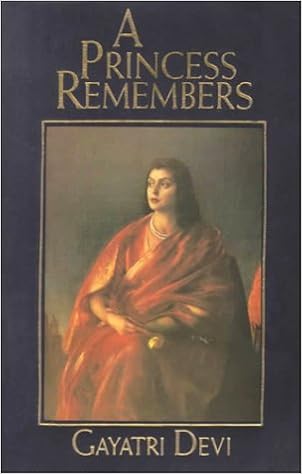
Now we see a huge boundary wall at Arubru Palace. There are three main palaces in Jaipur and the Temple of Monkeys is a revered site. Old antics of the Maharajas are sold there. I read what informed the decision to sell their relics from the book: A Princess Remembers by one of Jaipur’s foremost Princesses, Gayatri Devi (originally from Cooch Behar).

Jaipur is the centre to gem stones, arts, polishing of stones and home of textiles. It is also the city of elephants. Horses can be seen nibbling on grasses along the road – even joining road users in the use of pedestrian passes and highways. And you’ve got to respect their right to use the road as you do! Camels are also a common sight on the streets and roads of Jaipur, where Elephants, pigs, the sacred cows and donkeys all have a right of way. 

And then we arrive at the slum areas of Jaipur which greets us with gleeful pleasure! The gypsies are very common here. They only stay in a particular axis every two months or so and then relocate – always on the move like the gypsies you find in the UK or nomads of Northern Nigeria. I guess it’s a kind of life certain persons truly enjoy. Perhaps the bucolic life free from the rat race life of the urbane frenetic tension is good enough reason? Our guide said when the government gave lands to them to keep the gypsies in one place, they still moved from one place to another like travelers; many selling off the land given to them to continue the life of a purposeful wanderer.

Back in the days though, the armories and weapons I was told were guided and provided by the gypsies. Perhaps this explains why they prefer their freedom? Living the life of a mercenary, which no longer has a place in modern society, hence their feeling of disconnectedness to the rest of society? Perhaps after the wars ended, they simply returned to what they’ve always been? Well, I can’t categorically say – it’s just an inchoate thought.

Jaipur the city where the colour pink is royalty has 3 forts: Amer Fort (also spelled and pronounced as Amber is built of sandstone and marble), Jaigarh Fort, and Nahargarh Fort. Bolero jeeps seems to be the car of choice in Jaipur especially as we head towards to Amer fort due to its winding, rough and uphill terrain. Iconic structures such as the City Wall of Jaipur, City Palace, Diggi Palace, Hawa Mahal will simply blow your mind.

Reaching Jaipur, lodged at the Ramada Hotel, I look out the window and was struck by how the entire landscape, hills, architecture, road links was so reminiscent of Minna in Niger State particular that area where IBB resides.

The Royal Family in Jaipur and elsewhere in India has no ruling power. The chief ministers who make up the legislature make rules for the state which the Governor of the state simply signs, almost without questioning their decisions (except in very rare cases). I got a deeper appreciation of the nobles and their unprecedented contribution towards Independent India in 1947 after reading the A Princess Remembers.

The current king of Jaipur is 18-years-old and single. He is the titular head of the royal family, King number 141. He became crowned when he was barely 12-years-old to become Maharaja Sawai Badmnabh Singh. The Royal family of Jaipur who first located themselves at the Amer Fort some 1,000 years ago are originally from Central India and not from Jaipur. Jaipur was given to them as a marriage gift by the people some 300 years ago.


In 1902, it was said that of the King of Jaipur, Maharaja Ram Singh II when he visited King Edward VII’s coronation, carried along with him 8,000 litres of water in the biggest silver jars in the world. Why go through all that trouble you may wonder. Well the Maharaja said he could only drink India water and no other! This obviously was based on the Hindu belief that if he crossed the seas over to Europe, he was sure to pollute himself and become defiled! This was just a tip of the many precautions and purification sacrifices he took as he ate only India meals while he was in England.

Unfortunately for the royal family, their power and wealth was stripped off when the government decided to take interest in the running of affairs in India after independence. The heir to the throne at the time, the grandmother of the current King, Maharani Gayatri, fought the government and even went to prison for daring so. Today she left behind a startling, revealing and most enjoyable memoir, titled: A Princess Remembers. 

The great wall of Jaipur is 18km long and takes one horse at a time compared to the Great Wall of China which takes 4 horses at any one time.

Today there is not enough water in Jaipur. It is fed along with three other states from a dam. They import vegetables, fruits etc from neighbouring states to carter for their agricultural needs. Other forms of business boom quite well in Jaipur: 

  • Hand block printing textiles, 
  • Gemstones and jewelries, 
  • Homemade carpets different from cashmere carpets that are very expensive. Jaipur carpets are cheap and feel like silk to touch. 
  • Lots of marble mines which accounts for the exceptionally high amounts of marble statues produced from this region.

There’s so much to see in Rajasthan, particularly in Jaipur. And that’s where our next story is taking us to: Amer Palace: where the Palace of Mirrors shines bright like diamonds. Click on link below for part 6 to enjoy that story.