Monday, November 23, 2015


My Love Story With India (Part 4)


THE MILLENIUM CITY

Image result for gurgaon skylineBehold Gurgaon the Millennium City! And aptly so.

Gurgaon is the definition of all things technology and sophistication – the Silicon Valley of India; the centre for international multinational companies like Google, Accenture, Bestech Cyperpark, high-rise buildings and lots of greenery. Beautiful high-rise apartments and buildings whether for private, office or public use adorn the city of Gurgaon.

Image result for gurgaon skylineGurgaon used to be an agricultural province, but within the last 25 years it has metamorphosed into a world class multinational cities within a city from all walks of life is situated. High rise buildings, post modern architecture, bridges, good road network, well cultivated greenery. It is also home to the Indira Gandhi Airport

This is the home to the beautiful magical world of KOD, Kingdom of Dreams. The first time I stepped inside KOD, I was mesmerized. I loved the emotions it evoked, the longing it cried for and I was beside myself with mirth. The design, the craftsmanship, architecture, and activities in KOD shows a lot of thought was given to making it just that: A MAGICAL WORLD.

The magic illusion of Kingdom of dreams where only nighttime is the only reality with an illusionary beautiful blue sky dotted with permanent glittering stars often leaves you wondering why it’s not day time yet. Ha!

If you want a feel of India theatre like Broadway, KOD is where you want to experience that. I was actually blown away by Tejas, a young man who knew his art of illusion. Sitting on the platform as he played sweet cunning tricks on my mind (even though I told myself time and again that I won’t be fooled), I ended up utterly enjoying myself, and so did the little girl Amita and her mother along with three other guys who were thoroughly as spell bound as I was.

As you drive further south, the city’s architecture is a throwback to styles of the 60s and 80s (India brick designs) interspersed with more modern sophisticated glass and marble buildings.


Ongoing construction of high rise buildings are a constant feature – like the city is burning and itching to re-assert itself and reach the sky in response to the dazzling brilliance of the sun’s rays towards it– like a grass stretching itself towards the sun.

The air around is a thin fog, just above the tall buildings: a collection of dust particles constantly whipped into the atmosphere, car fumes, smoke from burning bushes and activities from mechanized farming, bush clearing and activities related to construction of bridges for flyovers are also ongoing.

Both sides of the highway is littered with small and medium scale businesses providing daily and regular services in transport accessories for cars, tricycles, supermarket stores, appliances, petrol station, trucks and heavy duty vehicles with sand and stone pyramids packed on the shoulders of the roads, waiting for their next instructions or next port of call.
As we drive on highway 8 towards the airport, you begin to head south of India towards Jaipur.

All kinds of Vehicular contraptions can be seen all over India, especially in the industrial zones. Quarries for breaking stones, gravels etc., into finer bits and granular chunks produce a lot of dusty air. You find bikers covering their noses.

Scattered private buildings with beautifully decorated walls roll past as we gain speed on the highway; hills after hills similar to what you find in Okene and Lokoja in Nigeria on your way to Abuja dominate the stretch of land. Trees, shrubs, hills, high tension wires, thatch houses, tall buildings still under construction, dilapidated structures of all kinds, old and new buildings can be found within the same radius.

Every Stateline I crossed, I get a ping on my phone alerting me to read my sms – a network announcing “Welcome to India” from Airtel India or “Namaste” from AR-AIROAM. For example, when I got to Rajasthan I got a “Namaste” greeting but when I landed in Delhi I got a “Welcome to India” from AirtelNG.

For every patch of empty brown grassland you pass, you pass an equal amount of land bearing the weight of colourful architectural designs. Trees commonly cover the front of houses as though shielding it from the direct rays of the sun when it faces that direction as you drive past. No wonder some of their house retain their colour and beauty.

Further away from the city, sales of beautiful colourful items, sculptures, carvings, etc., are prominently displayed on both sides of the highway. As we drive further out of the main of city Gurgaon, trucks, tankers, trailers become a common fixture building up into a series of traffic lines. Road diversion signs are commonplace, exacerbating the traffic flow. The 911 trucks equivalent in Nigeria stretch as far as the eyes can see: long school buses, small cars, trucks, trailers, high-end vehicles tail each other bumper-to-bumper. The trucks are painted in bright beautiful colours, sometimes adorned with rich Hindu words in red, orange, white or pink. Where words are lacking, bright paintings of well decorated and richly adorned India women carrying baskets on their heads is also depicted on the body of these trucks. It leaves you with a heady feeling.

As we inch closer to the mouth of the diversion, I find that the resulting traffic was due to a tragic road accident caused by a truck driver who ran over a bike rider, chopping off his head. A large crowd of people have gathered; their faces betray an array of emotions: anger, sadness; many including myself bewildered at how this could have happened. The dead man (who seemed young-looking from the sneakers he wore, white shirt, colourful wrist bands), was covered with another white short over his non-existent head. I hope he gets a decent burial and the accident thoroughly investigated to determine the cause and met out justice as applicable.

As soon as we were cleared to move, our driver inched further on and enter the place called Dharuhera, a local town after Gurgaon, which unexpectedly open its doors into more high-rise buildings. Our guide tells us that the Japanese and Korean companies have made this town their manufacturing abode, their companies spotted along the roads.

Gradually we leave the houses and people behind and drive through a stretch of desert land. Finally we reach another town, Neemrana, another town on the desert road. This place is a Japanese zone, we are told. The area feels like Bauchi/Azare of Nigeria: sunny, hilly environment, sparse greenery, scotched earth, livestock grazing and sun-dried hays litter the length of it as we travel on Highway 8 which seems to be a long continuous stretch of well-made road sneaking through all these country sides. Old, peeled-off painted Industrial buildings litter the stretch of land and open spaces.

Marble factories can be found. The business of re-cycling of papers, nylons and plastics seems to be a constant activity going on here. Another common feature is buildings broken down halfway (perhaps they will be rebuilt? Or is this the pattern…).

Neemrana is a long stretch of arid land notable for animal rearing and livestock grazing, industrial plants: home of Michelin Tyre Manufacturing company.

We pass so many other country towns similar to Neemrana until finally we reach Rajasthan – The land of HOT SPICES! Let Part 5 take you there. Click the link below.


Attribution for pix 1 and 2: Tripadvisor.com; Pranavbhasin.com


My Love Story With India (Part 5)


The following day, after a great meal, I got an eyeful of this beautiful state called Rajasthan! Its capital Jaipur is full of wonders bordering on the incredible! As a matter of fact, Jaipur left with waxing lyrical poetic nonsense(rofl). Let me introduce you to RAJASTHAN!


RAJASTHAN:


The No. 1 eaters of hot chilies in all India!

Successors of the Indo-Scythians Saka era.

The Place of Kings, Carpet Gardens, Fabulous Forts and Palaces!

 Land of the Gurjars, The Protectors.

Land of the Rajputs, Warriors of Rajasthan; Best Soldiers in India!

Rajasthan!  The Land of Merchants of Medieval India.

 Home of Hindus, Muslims and Jains.

 Land of The Sun God, Lord Shiva, Lord Vishu, and Bhavani.

Rajasthan: The City of Elephants. The Largest state in India!

The Land of Ornaments and Jewelries.

The Bastion of Princes!


So goes the poetic rhetoric.It is also the motherland to the city of Jaipur: home of the Temple of Monkeys and the 18th century Jantur Mantar Observatory. As we drive in, I couldn’t help but notice the large amount of white marble sculpture, designs, slabs, and pottery making. And when the British came here, they simply corrupted the name Rajasthan to Rajputana.


First we stop at  popular stop-over restaurant not too far from the boundary where we were greatly entertainmed with drums, shekere, flutes and singing. Thereafter we ordered some local dishes to have a taste of Jaipur's tongue-bursting delicacies. Ulalalacious. And jut before we leave, a special scale of three-piece mini silver bowls containing a mouth-cleansing minty Aniseeds, local sugar and other flavoured seeds help diminish any after taste in you mouth after chewing them.


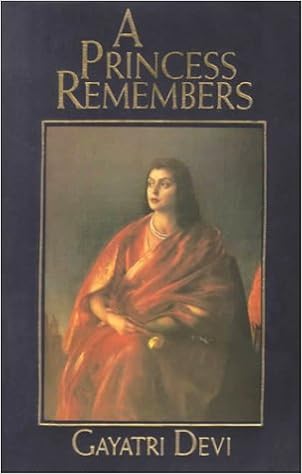
Now we see a huge boundary wall at Arubru Palace. There are three main palaces in Jaipur and the Temple of Monkeys is a revered site. Old antics of the Maharajas are sold there. I read what informed the decision to sell their relics from the book: A Princess Remembers by one of Jaipur’s foremost Princesses, Gayatri Devi (originally from Cooch Behar).

Jaipur is the centre to gem stones, arts, polishing of stones and home of textiles. It is also the city of elephants. Horses can be seen nibbling on grasses along the road – even joining road users in the use of pedestrian passes and highways. And you’ve got to respect their right to use the road as you do! Camels are also a common sight on the streets and roads of Jaipur, where Elephants, pigs, the sacred cows and donkeys all have a right of way. 

And then we arrive at the slum areas of Jaipur which greets us with gleeful pleasure! The gypsies are very common here. They only stay in a particular axis every two months or so and then relocate – always on the move like the gypsies you find in the UK or nomads of Northern Nigeria. I guess it’s a kind of life certain persons truly enjoy. Perhaps the bucolic life free from the rat race life of the urbane frenetic tension is good enough reason? Our guide said when the government gave lands to them to keep the gypsies in one place, they still moved from one place to another like travelers; many selling off the land given to them to continue the life of a purposeful wanderer.

Back in the days though, the armories and weapons I was told were guided and provided by the gypsies. Perhaps this explains why they prefer their freedom? Living the life of a mercenary, which no longer has a place in modern society, hence their feeling of disconnectedness to the rest of society? Perhaps after the wars ended, they simply returned to what they’ve always been? Well, I can’t categorically say – it’s just an inchoate thought.

Jaipur the city where the colour pink is royalty has 3 forts: Amer Fort (also spelled and pronounced as Amber is built of sandstone and marble), Jaigarh Fort, and Nahargarh Fort. Bolero jeeps seems to be the car of choice in Jaipur especially as we head towards to Amer fort due to its winding, rough and uphill terrain. Iconic structures such as the City Wall of Jaipur, City Palace, Diggi Palace, Hawa Mahal will simply blow your mind.

Reaching Jaipur, lodged at the Ramada Hotel, I look out the window and was struck by how the entire landscape, hills, architecture, road links was so reminiscent of Minna in Niger State particular that area where IBB resides.

The Royal Family in Jaipur and elsewhere in India has no ruling power. The chief ministers who make up the legislature make rules for the state which the Governor of the state simply signs, almost without questioning their decisions (except in very rare cases). I got a deeper appreciation of the nobles and their unprecedented contribution towards Independent India in 1947 after reading the A Princess Remembers.

The current king of Jaipur is 18-years-old and single. He is the titular head of the royal family, King number 141. He became crowned when he was barely 12-years-old to become Maharaja Sawai Badmnabh Singh. The Royal family of Jaipur who first located themselves at the Amer Fort some 1,000 years ago are originally from Central India and not from Jaipur. Jaipur was given to them as a marriage gift by the people some 300 years ago.


In 1902, it was said that of the King of Jaipur, Maharaja Ram Singh II when he visited King Edward VII’s coronation, carried along with him 8,000 litres of water in the biggest silver jars in the world. Why go through all that trouble you may wonder. Well the Maharaja said he could only drink India water and no other! This obviously was based on the Hindu belief that if he crossed the seas over to Europe, he was sure to pollute himself and become defiled! This was just a tip of the many precautions and purification sacrifices he took as he ate only India meals while he was in England.

Unfortunately for the royal family, their power and wealth was stripped off when the government decided to take interest in the running of affairs in India after independence. The heir to the throne at the time, the grandmother of the current King, Maharani Gayatri, fought the government and even went to prison for daring so. Today she left behind a startling, revealing and most enjoyable memoir, titled: A Princess Remembers. 

The great wall of Jaipur is 18km long and takes one horse at a time compared to the Great Wall of China which takes 4 horses at any one time.

Today there is not enough water in Jaipur. It is fed along with three other states from a dam. They import vegetables, fruits etc from neighbouring states to carter for their agricultural needs. Other forms of business boom quite well in Jaipur: 

  • Hand block printing textiles, 
  • Gemstones and jewelries, 
  • Homemade carpets different from cashmere carpets that are very expensive. Jaipur carpets are cheap and feel like silk to touch. 
  • Lots of marble mines which accounts for the exceptionally high amounts of marble statues produced from this region.

There’s so much to see in Rajasthan, particularly in Jaipur. And that’s where our next story is taking us to: Amer Palace: where the Palace of Mirrors shines bright like diamonds. Click on link below for part 6 to enjoy that story.

My Love Story With India (Part 6)


JAIPUR:


AMER PALACE

Spanning a period of about two centuries, with a classic fusion of Mughal and Hindu architecture built of red and yellow sandstones with white marble, the Amer Palace is a testament to man’s ability to create masterpieces. It took three generations of Jaipur kings beginning with Raja Man Singh I and completed by Mirza Raja Jai Singh and Sawai Jai Singh in the twentieth century.

The most exceptional Kings of Jaipur has the name “SAWAI” added to their names. It means 25% more intelligent than the usual.


Amer Palace is home to the Kesar Kyari Garden, Maota Lake, Palace of Winds (Hawa Mahal), Man Singh Palace, Baradari, and much more.


PALACE OF MIRRORS (Sheesh Mahal)
There are three entrances into the Amer Fort Palace: The Sun Gate (Suraj Pol – through elephants come through a very steep climb directly into the courtyard), Lion Gate (Singh Pol – takes you to the Hall of Public Audience; Diwan-i-Am with 27 colonnades), and Elephant Gate (Ganesh Pol – leads to the private apartments of the royal family).

To enter the inner palaces of the Amer, the main entrance portal known as the Ganesh Pol is the most magnificinet portal in Rajasthan. It is covered with elegant frescos and crowned with pavilions carrying fascinating jail screens. This place houses the Sheesh Mahal (Palace of Mirrors where the art with ornamentation with glass sits), Diwan-e-Khas, or ‘Hall of Private Audience”, Jai Mandir with millions of glass pieces on stucco, the Zenana palace and not too far from it, the courtyard with a Baradari (a 12-door building structure that allows free flow of air), which is surrounded by ladies apartments and fresco depicting Khrisna-lila scenes simply draws your attention to stand still, watch and marvel at the ancient lives and minds of those who once lived there.

Now imagine it is nighttime. Strike a match to a candle and that single flame of light can illuminate over 100,000 reflective mirrors, lighting up the entire Palace of Mirrors!

The architectural finishing of the Palace of Mirrors and some notable marble-built structures often left me in wonderment as to their true secret. Well, I got to find out that limestone powder, marble dust and sea shell powder to which is added olive oil and coconut oil for a thorough blend is what makes the beautiful walls smooth, sparkle and glimmer like that of the Taj Mahal. The gemstone powder is the source of reflected lights you see when the sun’s rays glaze over the walls of the Taj Mahal.

Our guide tells us a most fascinating story. During the 13th century the King of Jaipur fascinated with Persian carpets, wanted to decorate his palace with them. Of course there were carpet markers in Jaipur, but here’s the difference. In Jaipur the carpet weavers weave their carpets in a single layer carpets with double knot at the ends. But the Persians (modern day Iran) weaved their carpets knot by knot in a symmetrical double knot and double layers which keeps the carpet firmer compared to that of Jaipur. However, when it comes to bearing weight on it, say for example you place a heavy box on the Jaipur carpet and that of the Turkish carpet, the Jaipur carpet easily bounces back to its original form after the carpet is removed because of its loose style of weaving. This is not the case for the Turkish carpet which remains in the depressed state, thus losing its original form. The rule therefore is not to place heavy objects on a Persian carpet!

To show his subjects how beautiful the carpets made by the Persians for his palace were, he commissioned the Persians to once again weave a large-than-life equivalent for public view. This carpet sits atop the Maota lake like a beautiful garden of well groomed flower plants. Today, the double knot carpet technique of the Persians is has become part of the weaving technique of Jaipur’s carpet weavers. 

Our eager guide let us in another secret. I discovered the Flower with Many Elements. This flower sculpture becomes whatever your palm – placed over it to obscure a part of it – can turn into a crab, a snake, a flower, a tail, etc. And here’s another secret! When we got to the Turkish Bath we discovered there’s a wonderful architectural design calculated such that I can whisper to you through a particular wall and no one else will hear our conversation but us!


Gosh! India has an incredible way of telling stories through motifs, bass reliefs, fresco, wall paintings, and architecture.


THE ONE TRUE SMILE

The year was in the 1600s. Twelve women sit in the courtyard close to the Zenana Palace (Queen’s Palace) – each with a golden glowing smile. These are the 12 wives of the Warrior King, Maharaja Man Singh seated under the roof of the Baradari for their usual private meetings with the King, the curtain pulled off revealing to the guards and visitors those seated within. The Maharaja looks at his wives adoringly – he knew something that the other 11 Maharanis did not know. Yet each them share with him a distinctive esoteric smile; the smile that is suppose to betray she was the chosen one who got the king the night before. But only one of them on any particular one day actually has the One True Smile – a gift bequeathed her the night before when she and the king spent the night together in romantic and erotic karma sutra bliss.

The king visits each wife using this axis and a series of secret passage doors without the other wives being aware he was spending the night with the other. And since the Zenana (Queen Palace) has no window through which the wives can see the goings-on around them, the King easily has his way with the Chosen Queen of the Night in the courtyard with the curtains pulled down. From here it is easy for him to ‘sneak’ right back to his palace just as the Queen of the Night is guarded by back unseen to her chambers in the Zenana.

However, when the women sit in the courtyard, originally called the Harem, you’ll find all 12 wives smiling pretentiously, none wearing a frown, afraid of giving herself away as the one who knew the king did not spend the night with her. Yet, amongst them, only one wife can tell that the 11 other smiles wore plastered smiles, one meant to hide their disappointment or embarrassment. Ironically, the wife with the one true smile – the most radiant and authentic smile of all – keeps this as her special entitled secret; savouring it like a well-kept secret.


The king keeps a string of female guards or eunuchs to watch over his Queens and concubines. Maharaja Man Singh is reputed to have kept an additional 100 concubines and hundreds of female servants! These guards and eunuchs run every day tasks: massages, security, chores, errands (and sometimes getting an ‘accidental’ male visitor to sleep with the sex-and-attention-deprived wives for a quickie. Should the male visitor however be caught by the King – who keeps an ever vigilant eye on his harem and spies the ‘unknown man’, he is instantly castrated and turned into a eunuch who now becomes one of the security guards for the wives).

On the Zenana walls close to the lintel near the roof we see miniature 400-years-old painting of in their original depictions. In Hindu religion, the knowledge of Kama Sutra was never debased as porn but was used practically as sex education to children and pupils. But this perception suddenly changed with the Muslim invasion of Islam which considered knowledge of this as immoral and deserving of heavy fines, leading to the dearth of that knowledge for a very long time (up to 200 years); until more recently, a revival of its original spirit is now been championed, regaining a new momentum, which is now been taught as what it once was: proper sex education. Any wonder why India women are such dreamy romantics.

Our guide shows us a particular Teak Wood – over 400-years-old – which allows for stamp indentions, etc. These doors are specifically used to make the private doors leading to the chamber of each Queen.

As we head to the library, India tunes blare from flutes. We turn our heads and there they were! The snake charmers! Here’s another top secret: both real and plastic snakes are conjured when snake chamber blow their flutes and hit the wooden drums. Jaipur is a land of snakes and snake charmers belong to a particular caste.

PINK CITY
Pink City is the only planned city in Jaipur; 9 Sq.km long.  Originally built with 7 Gates, an 8th one was added in modern time. Pink is the compulsory colour since 1876 when the Maharaja welcomed the Prince of Wales as a tribute to him. However, the internal walls of a home are painted according to the varied taste of the occupants.

Inside the Pink City is the Wind Palace. It owes its name to the 970 small windows, built specially for the royal ladies who were not allowed to mix with the outside crowd. From these numerous windows, they are allowed to catch a glimpse or sit and watch the goings-on of the outer world in view whenever there’s a event, a ceremony and gathering for which they are permitted to look in.

Amber Fort was built before the City Palace. And the King moved from Amber Fort to the Palace. The Pink City is also known as the Sun Dynasty. The Moon palace is the highest building in the Walled City (another name for the Pink City). No other building is allowed to be taller than the Moon Palace which is also known as the Yellow Building.

The China Mirror (Snake Mirror) was an exchanged between the Chinese and Jaipur.

The Pink city is planned according to the caste system. And the natives lives inside here. The lower floors are used for businesses and the top floors are for accommodation purposes. There are 4 major castes: The Priests, The Soldiers, The Merchants and The Servants. Even your surname can betray the caste you belong to, so does the job you do, even the colour and style of the turban a man wears is a giveaway of sub-castes. For women, the style of costumes and jewelries she’s adorned with reveals her caste.

Caste is the equivalent of class in some other societies. The difference is that you are born into one; while in class you can choose to rise out of it. The former you really have no say, no control, no hope of even getting or climbing out of it. You either choose to love it, accept it, or live with it. That choice is up to you. However, one of the quickest, not too common, but often sought after is to marry into a different or more superior caste, like the Queen of Jaipur did when she married a local fisherman when she was widowed. That act forever lifted the man’s generation to an enviable caste.

Visiting the Royal Artists centre, we see how squirrel furs makes fantastic single-hair brushes for royal art painters in Jaipur. The art of painting is passed on from one generation to another. Sitting down on a soft padded stool, I watch in fascination as the artist, using a single brush, dipped in natural colour palate, painted me an elephant in less than 5 minutes! 

My current artist is a 5th Generation artist. And so will is progeny (unless say 500 years from now, the caste distinction has been demystified to the point where people wonder how their ancestors could have lived that long that way [wink!]). I see an ancient original seal and stamp can be seen bearing the inscriptions: JEYPOOR. It means Jaipur as we know it today.

BLOCK PAINTING FABRIC DESIGNING

Colours of paints are taken naturally from vegetable plants and their particular flowers, e.g. the colour BLUE is taken from Indigo flowers. Natural vegetable colours do not wash when the process is complete, says the block painting expert. To begin the process, the cloth is laid stretched on a flat board, and block after block – up to five or seven colours – each with a particular colour, is placed one after the other in succession. After that, the cloth is placed in salt water which heightens the colour, and is in turn dipped into rain water to make it permanent. Block painting is used to make fabrics like table cloths, bed sheets, etc.

Jaipur like everywhere else in India believes in luck too, especially the fortune attached to that which the Elephant symbolizes: Good luck, good fortune, Happiness and Prosperity. Peacock means: integrity and beauty. Camel symbolizes tenacious mental and physical strength, Horses: velocity, vitality and beauty. Sometimes it could mean loyalty, industriousness and swiftness. Click the link below for stories on, India Ghost Town, Taj Mahal and more.